
 Journal of Artificial Intelligence and Capsule Networks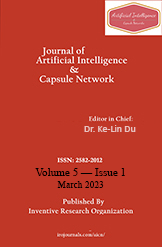
 view PDF
How to Cite
Keywords
Abstract
Artificial Intelligence (AI) ethics are the values and principles that govern the creation and application of AI. As AI technology develops quickly, there is rising worry about the possible ethical ramifications of its application, including concerns about privacy, bias, accountability, transparency, safety, and the effect on society as a whole. Making sure AI systems are created and used in a way that respects human rights and values is one of the main concerns of AI ethics. For instance, there can be worries about the use of AI in surveillance or the possibility that these technologies will legitimise already-existing social prejudices and discrimination. Making sure AI systems are accountable and transparent is a key aspect of AI ethics. It can be challenging to comprehend how AI systems make judgements and who is accountable for those decisions as they get more complicated and autonomous. Transparency in AI research and decision-making, as well as systems for accountability and remedies when things go wrong, are becoming increasingly important. Additionally, it's important to guarantee the security and safety of AI systems. Concern over the possibility of cyberattacks and other types of harmful use is growing as AI systems become more linked and incorporated into our daily lives. Finally, it's important to make sure that AI is created and applied in a way that benefits all humanity. This entails tackling problems like employment loss, economic inequality, and the possibility that AI will be applied in ways that are detrimental to society. There is an increasing need for cooperation between business, government, academia, and civil society to address these and other ethical issues. This involves creating moral standards, norms, and best practises as well as the systems necessary to guarantee responsibility and compliance.
References
- Bostrom, Nick, and Eliezer Yudkowsky. Forthcoming. “The Ethics of Artificial Intelligence.” In Cambridge Handbook of Artificial Intelligence, edited by Keith Frankish and William Ramsey. New York: Cambridge University Press, 2011.
- Asimov, Isaac., “Runaround.” Astounding Science-Fiction, 94–103, March, 1942.
- Bostrom, Nick, “Existential Risks: Analyzing Human Extinction Scenarios and Related Hazards.” Journal of Evolution and Technology, 2002, http://www.jetpress.org/volume9/risks.html.
- Nithesh Naik, B. M. Zeeshan Hameed, Dasharathraj K. Shetty, Dishant Swain, Milap Shah, Rahul Paul, Kaivalya Aggarwa, Sufyan Ibrahim, Vathsala Patil, Komal Smriti, Suyog Shetty, Bhavan Prasad Rai, Piotr Chlosta and Bhaskar K. Somani, "Legal and Ethical Consideration in Artificial Intelligence in Healthcare: Who Takes Responsibility?", Sec. Genitourinary Surgery Front. Surg., Sec. Genitourinary Surgery, Volume 9, 14 March 2022, https://doi.org/10.3389/fsurg.2022.862322
- Margarita Simonova, "Top Nine Ethical Issues In Artificial Intelligence", Forbes Technology Council, https://www.forbes.com/sites/forbestechcouncil/2022/10/11/top-nine-ethical-issues-in-artificial-intelligence/?sh=2b10a32e5bc8, 11th October 2022.
- Alice Pavaloiu, Utku Kose, "Ethical Artificial Intelligence - An Open Question", Journal of Multidisciplinary Developments, e-ISSN: 2564-6095, 2(2), 15-27, 2017.
- H Y Li ,J T An and Y Zhang, "Ethical Problems and Countermeasures of Artificial Intelligence Technology", E3S Web of Conferences 251, 01063 (2021), https://doi.org/10.1051/e3sconf/202125101063, TEES 2021.
- Deng R 2020 Reflection on the science and technology ethics of artificial intelligence development J. Guangxi Social Sciences 10 93-7
- Yu X and Duan W 2019 Ethical construction of artificial intelligence J. Theoretical Exploration 06 43-9
- He J and Meng P 2020 Xi Jinping's "five theories" on science and technology ethics J. Truth from Facts 3 11-6
- Zheng Z 2021 Ethical crisis and legal regulation of artificial intelligence algorithms J. Law Science. Journal of Northwest University of Political Science and Law 1 1-13
- Turner J M 2019 Robot Rules: Regulating Artificial Intelligence (Switzerland: Palgrave Macmillan imprint)
- Liu X 2020 Legal philosophical thoughts on the nature of tools of intelligent robots J. Criminal Science 5 20-34
- Tang L 2020 Public nuisance to algorithm application and its governance paths J. Northern Legal Science 3 51-60.
- Chen S 2020 Algorithmic governance: risks and countermeasures of technological alienation in intelligent society J. Journal of Hubei University. Philosophy and Social Sciences Edition 1 158-65
- Luciano F M 2016 The 4th Revolution: How the infosphere is reshapin (Zhejiang: Zhejiang People's Publishing House)
- Bostrom, N. (2014). Superintelligence: Paths, Dangers, Strategies. OUP Oxford.
- Bostrom, N. (2015). What happens when our computers get smarter than we are? Retrieved 3 April 2017, from https://www.ted.com/talks/nick_bostrom_what_happens_when_our_computers_get_smarter_than_we_are
- Brent Mittelstadt, The impact of Artificial Intelligence on the Doctor - Patient Relationshp", © Council of Europe, December 2021.